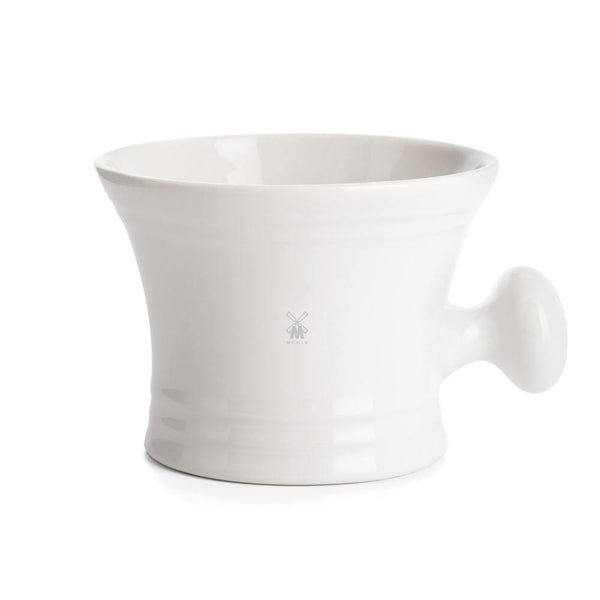
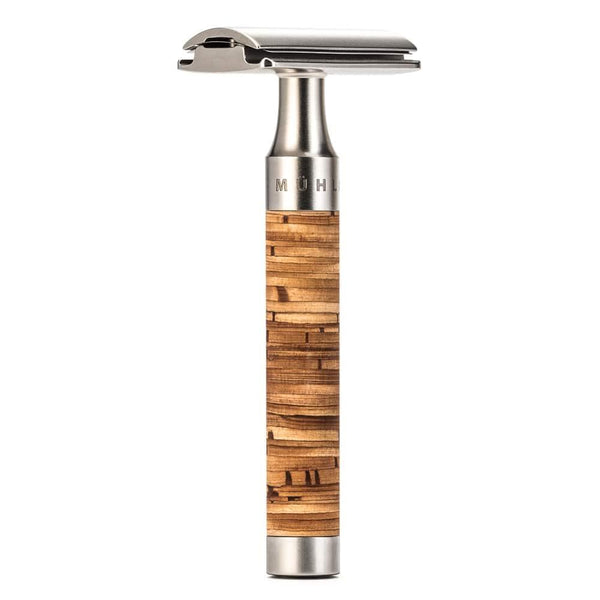
TRADITIONAL - For Traditionalists with High Standards
Classic razors, where you choose the blade, are a revolution in wet shaving and one of today's most classic shaving accessories. But with Mühle, there's more: ergonomics created for passionate wet shavers, perfect maneuverability with an optimized center of gravity, and of course, excellent craftsmanship...
After a little practice, no one who masters the ritual can continue their life without a classic razor! Standardized safety blades, available for decades, are now much easier to obtain from many sources than before.
Our models come with high-quality chrome plating. They are combined with elegant and high-quality resin in classic metallic, black, or brown colors. An exclusive option is a handle plated with rose gold.
The brushes of the shaving sets are made with badger or Silvertip Fibre bristles and are presented as a complete set, combined with a shaving set stand. The shaving brush heads are interchangeable. You can purchase a replacement brush head to use your brush with a different bristle type or to refresh it.
Traditional classic shaving sets, with their timeless design and material quality that will never go out of style, are with you today and in your future.
All TRADITIONAL series>
Usage and Tips
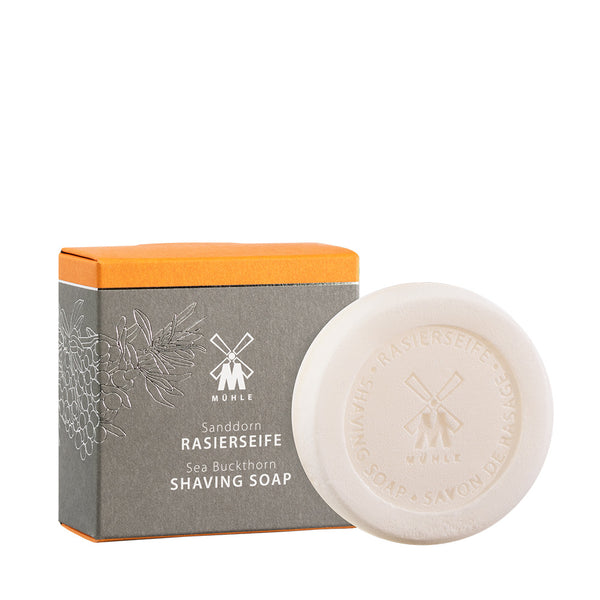
- In traditional wet shaving, preparation is important. Skin and beard should be softened during preparation, and this process should only be done with lather obtained from cream or soap.
- The skin should be softened with shaving cream, preferably (ideally) with a shaving brush. Moving the lather around your face with a shaving brush for about 1 minute is sufficient to soften and stimulate the beard.
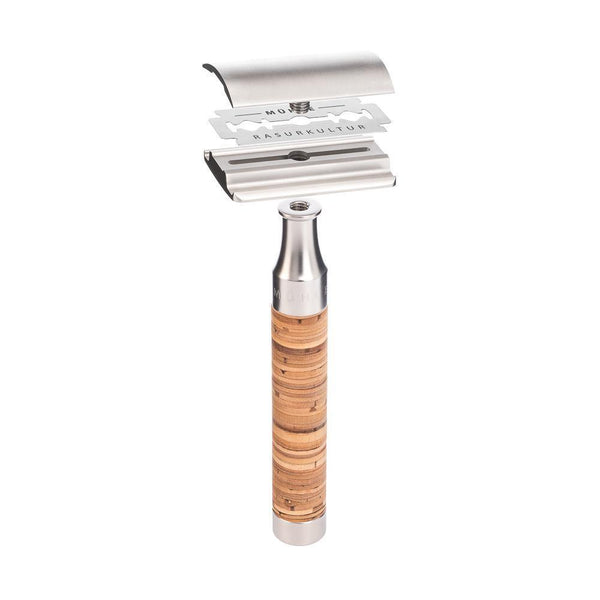
- Open the head of your razor. Hold the razor blade by its short edge, insert it into the razor, and close it.
- If your razor is a 3-piece model, it will open by twisting the head; if it's a 2-piece model, it will open by twisting the mechanism on the handle.
- Then, begin shaving. Open comb razors can directly contact the skin without a safety bar. They cut and shorten the beard, which is why you need to shave in passes. It is important to shave according to the direction of beard growth.
- Make the first pass in the same direction as the beard growth. While this direction is from top to bottom on the cheeks, it may vary on the neck. The direction of beard growth is different for every man and cannot be changed by the shaving direction.
- Do not press. Classic razors shave with their own weight. Gently hold the razor by its handle and do not press it against your skin. Allow it to glide smoothly with the lather and blade. For beginners in traditional wet shaving, our primary goal is to achieve an irritation-free shave, not necessarily a completely clean one. As you get accustomed to it (approximately 8-10 shaves), clean shaves will come naturally. Do not go over the same spot multiple times.
- After the first pass, reapply lather to your face with a brush or your hand. For the second pass, shave in the same direction again or in a cross-grain direction for a closer shave (e.g., from ear to cheek, or cheek to ear).
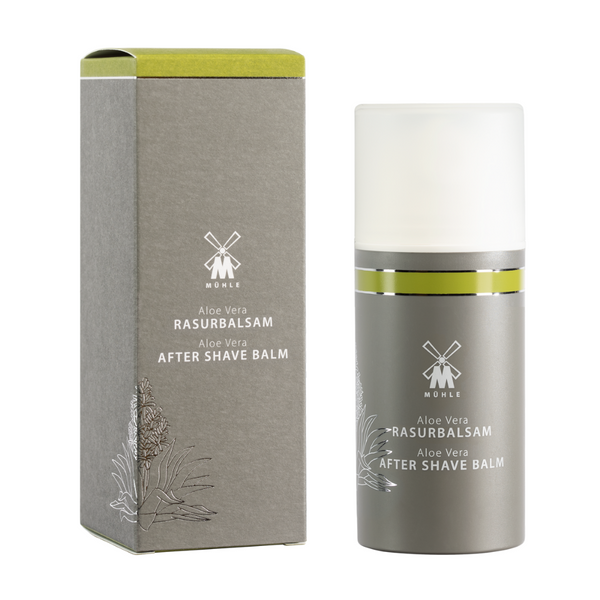
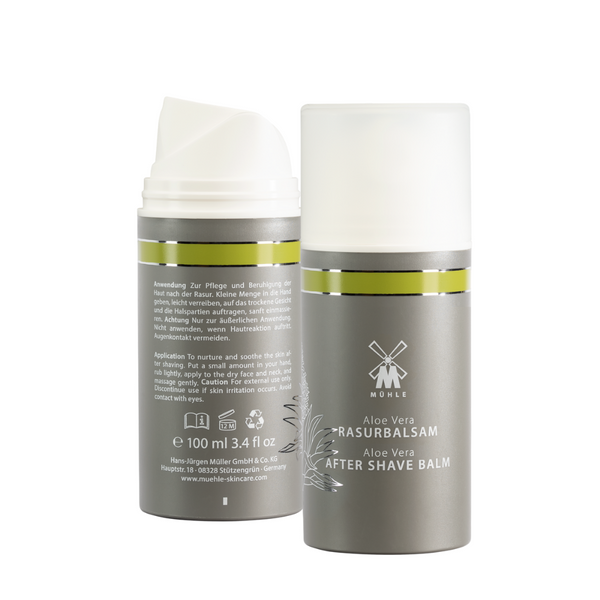
- The skin perceives each blade contact as an impact. After shaving, it is important to soothe this impact. Post-shave products contain highly soothing ingredients. If you experience problems such as dryness, itching, or redness, use a balm. If you do not encounter such discomforts, you can use a lotion for a lighter effect. The combined use of both is also common; you can apply lotion first, then balm.
- We recommend not shaving against the grain until you are fully accustomed to the razor. This can cause undesirable conditions such as irritation or ingrown hairs.
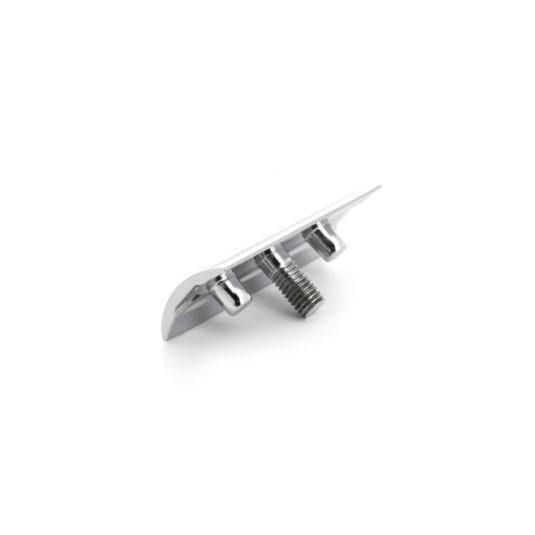
- Mühle classic razors have metal, chrome-plated heads. Applying excessive force to the metal parts will cause screw deformation; please do not do this. Lubricating the metal parts with metal oil a few times a year will add value to the lifespan of your razor.
- After shaving, remove the blade from the razor, dry it, and store it in its paper wrapper. Mühle razors are made of stainless zamak alloy. However, we do not recommend prolonged contact of the surface with a rusty blade.
- The average number of uses for razor blades is 4-5, but this is directly related to the razor used, shaving frequency, blade brand, and skin type. Therefore, each person's number of uses is unique to them. Change the blade as soon as you feel it pulling your beard instead of cutting it. Do not shave with a dull blade, as it will cause irritation.