



We continue with Burak Tabağ. For those who don't know, in recent weeks we talked about the possibility of exercising at home. Burak, a professional exerciser, told us that exercising at home and online coaching are possible. We said that exercising at home is perfectly possible. For those who missed that topic, the link is here.
This week's topic is muscle mass loss. As you know, since we've been cooped up at home, we haven't been able to do any activities effectively. We know that some gentlemen, stuck at home, have started losing the muscles they gained at the gym. So, how does muscle mass loss occur? How can lost muscles be regained? We talked to Burak again.
Burak, hello. It's great to have you with us again.
Hello, thank you. It's great to be with you too...
Our topic is clear, let's get right into it: What is this muscle mass loss, Burak?
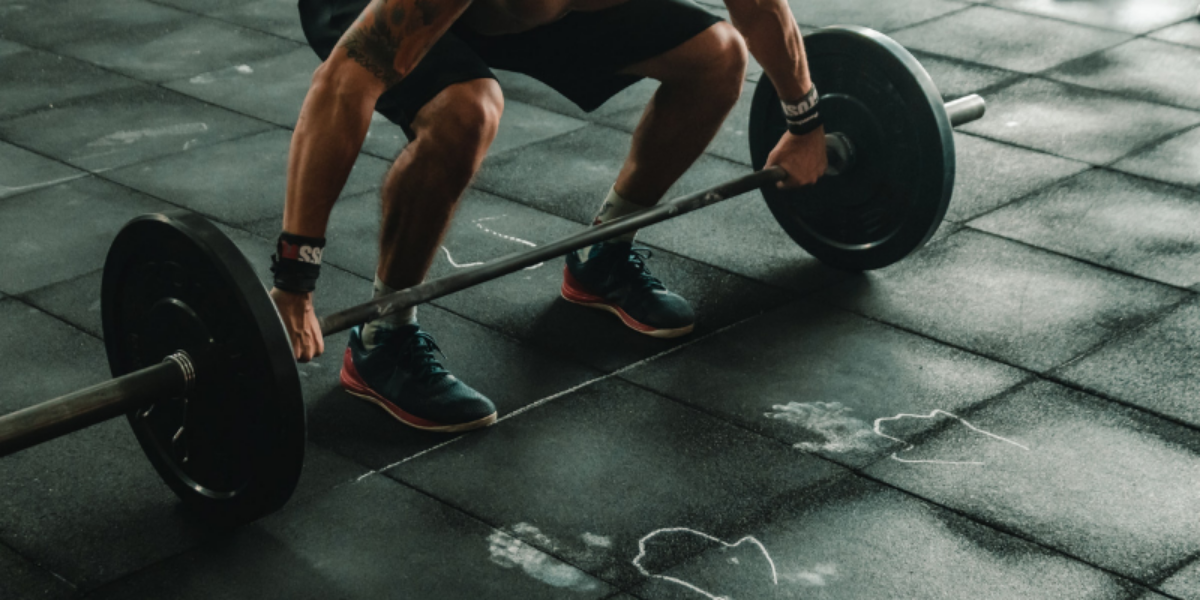
Muscle mass loss is called "Atrophy". Atrophy can be of two types: first, "Simple Atrophy", and second, "Numeric Atrophy". To simplify it, I can explain it like this: a muscle cell can grow. When it grows, its cytoplasm, fluids, and components forming the muscle tissue increase, and thus the muscle can grow. If exercise is not done for a while and the muscle is not subjected to stress, it shrinks along with its contents. This is simple atrophy. However, if it drops from five cells to three cells, there is a numeric atrophy, and that is the real danger.
When you explain it like that, we picture Popeye; when he didn't eat spinach, his arm would drop like a rubber band. Why does this happen? :)
It's almost like that, actually... :) If a person exercises regularly and then stops exercising for 2 weeks, atrophy begins. Of course, this atrophy starts as simple atrophy, but in later stages, it can progress to numeric atrophy. Because our body is programmed to ask, "Do I need this?" Normally, by exercising, we stress our body. This way, we add a stress factor to our daily routine that our body needs to respond to, and we start building muscle. When we stop the regular stress we subject our body to, our body responds with, "I don't need this, it's a wasteful energy expense." As a result, it tends to shed excess from the body, and atrophy occurs.
Burak, is stopping exercise the only cause affecting atrophy, or does the intensity of regular exercise also have an effect?

Actually, it has an indirect effect. The effect of atrophy seen in someone who exercises with very high intensity and then stops will be greater. Because no matter how much muscle is gained, the body will still say, "I don't need these excesses" through atrophy. The more muscle gained, the more muscle will be lost. In other words, the more muscle mass there is, the more the body will shed the excess in proportion to this volume.
Is there another reason affecting muscle mass loss? We are asking this independently of exercise.
Actually, there are 4 fundamental reasons for this: stopping exercise can be said to be the primary reason. But let me also state this; just as doing too little exercise, doing too much exercise also stresses the body and causes it to secrete cortisol, which also leads to atrophy.
The second reason is sleep. If we don't get enough and quality sleep, this will also lead to atrophy. For example, we have a hormone called melatonin. Its nickname is "Prince of the Night" because it is secreted between 11 PM and 3 AM when we are in deep sleep. If there is light in the environment, it is not secreted. This is very important evidence of how much we need night sleep.
The third reason is inadequate and poor-quality nutrition. This also leads to atrophy. What do I mean by poor-quality nutrition? It could be a diet that doesn't contain much protein. However, people should consume protein in grams equivalent to their body weight. Of course, there are many red lines on this issue, and I am giving advice as an exercise professional. These are actually topics that should be consulted with a nutritionist.
The fourth and, in my opinion, most important reason is mental stress. All of us actually have very serious stress factors that we are not very aware of, that we push to the back: family, work, pandemic, relationships, etc. These problems that you push to the back might actually be bothering you very seriously. This, of course, brings about consequences such as not doing regularly performed exercise, postponing it by saying, "I won't do it today." When the stress that the body is regularly exposed to disappears, mental problems indirectly lead to atrophy - and atrophy will bring other problems with it.
So, let's say they're going "Back to sport" :) Do you have any other dietary advice for this person?
Yes, I do, but first let me say this: unfortunately, I don't trust milk and dairy products at all. I mean, if you're consuming industrially produced milk and dairy products, the use of supplements that we consider harmful becomes insignificant. I definitely recommend homemade fermented yogurt. And kefir. If it doesn't upset your stomach, kefir is also very beneficial. Similarly, homemade pickles too... Because the microbiota is very important. The small intestine is also the organ with the most nerve cells after the brain. If the small intestine is happy, you are happy; I can say this very clearly. Because 95% of serotonin is secreted there. :)
Coffee is also a very good drink. As mentioned in many scientific articles, it is a proven fact that coffee speeds up fat burning. It also increases training performance, by the way. There is also research that states caffeine, taken around 800 mg (a high amount that won't apply to everyone) before HIIT workouts, increases performance by 25%.
Along with this, bananas are a very beneficial nutrient because they contain potassium. Then come carbohydrates. We are very afraid of carbohydrates, but they are actually our source of energy. We have demonized carbohydrates because we don't consume them correctly.
So, we can run to bakeries? :)
No. :) We can get the necessary healthy carbohydrates from vegetables and grains. Regarding the carbohydrate ratio, let me share some information from sports nutrition training: Someone who exercises and is active daily can consume carbohydrates in an amount obtained by multiplying their body weight in grams by 10. So, if they are 80 kg, they can consume 80 x 10 = 800 grams of healthy carbohydrates.

Burak, you shared very valuable information with us regarding preventing muscle loss and then regaining it. We are also curious about the role of "Muscle Memory" in regaining muscle mass. But first, let's hear from you; what is this muscle memory?
We talked about the volume the body needs for exercise; when the body receives more than it needs, it tends to revert to what it needs. This is a magnificent structure. Just as it can do this, when we need it, it can very quickly give us back what it has learned before. Just like riding a bicycle, it remembers even after years. Muscle memory works similarly.
So, what role does it play in regaining muscle mass?
Generally, among bodybuilders, muscle memory is described as something much more visible, but the event is actually this: the organelles that produce energy within muscle cells are mitochondria. Each cell nucleus is connected to each mitochondrion. When we subject muscles to stress, multiple nuclei begin to form within the muscle cells so that they can produce more energy. At this point, let's say muscle mass loss has begun. Simple atrophy occurred, and muscle cells began to shrink. Even though the components and organelles that make up the muscle cell decrease, the cell nuclei are always preserved. For example, a cell has two nuclei and one mitochondrion. When we start exercising again, the other nucleus also kicks in and forms a mitochondrion, and we can start producing energy again from where we left off. The ratio in this is usually fifty-fifty. For example; if I took a 3-month break, I can continue again in 1.5 months.
So, can they pick up exactly where they left off?
Not exactly. They shouldn't give in to their ego and think, "I was already squatting 100 kilos, now I can easily do this." They shouldn't say that. When they start again after a break, they will immediately see how ungrateful the body can be. Let's not even call it "ungratefulness" because this is the body's principle of self-preservation. My suggestion is a 50% ratio. Someone who can easily do 20 squats in a set should reduce this number to 10 when they take a break and then start again. It will take a very short time to get back to 20 anyway.
Burak, it was a very enjoyable conversation for us again. Thank you very much. :)
Thank you. :)
For those who say "I want to work with this guy," you can contact Burak via his Instagram account with the username @buraktabag.